Welcome to the Blog

Why Melasma Only Appears on the Face & What That Tells You About Your Body
Melasma doesn't target the face randomly, it's where melanocyte density, vascular reactivity, hormone receptor concentration, and neurogenic inflammation all come together at the same point, the face.

Can Melasma Be Cured? (What Most People Aren’t Told)
Melasma is often labeled as chronic, but that narrative is incomplete. Here’s what determines whether melasma persists or resolves, and why the right clinical approach changes everything.

Why Your Melasma Won’t Go Away (Even When You’re Doing Everything Right)
Melasma that won’t go away isn’t a skincare problem, it’s a signaling problem. Here’s what’s actually driving persistent pigment and why most treatments fail to create lasting change.

Why Dermatology Should Stop Ignoring Melasma
Melasma isn’t just pigment. It’s a sign of deeper hormonal, toxic, and vascular imbalance, often involving estrogen dominance, toxin overload, VEGF elevation, and systemic inflammation. Here’s why dermatology must stop treating it as merely a cosmetic concern.

Melasma Is Metabolic™: What Dermatology Misses
Melasma is not just hormonal or genetic—it's metabolic. The Melasma Metabolic Framework™ explains how hormones, gut health, inflammation, liver pathways, and mitochondria create pigment reactivity long before melasma appears on the skin.

Why Heat and Sun Make Melasma Worse (It’s Not Just UV)
Melasma isn’t caused by sun exposure it’s caused by how a stressed terrain reacts to light and heat. Discover how estrogen, mast cells, histamine, heat sensitivity, and oxidative stress create photoreactive pigment.

Oxidative Stress & Melasma: Melanin as a Protective Response
Melasma forms when oxidative stress overwhelms your terrain. This guide explains how inflammation, hormones, histamine, toxins, metabolic load, and stress signal melanocytes to increase melanin—and why true healing requires reducing oxidative stress.

Inflammation and Melasma: How Your Immune System Drives Pigment
Melasma isn’t just hormonal or genetic—it’s inflammatory. Discover how immune activation, mast cells, histamine, and oxidative stress drive pigment reactivity and why reducing inflammation is essential for long-term melasma healing.
Metabolism, Insulin & Melasma
Melasma is not just hormonal — it’s metabolic. Discover how insulin, blood sugar stability, bile flow, inflammation, and circadian rhythm influence pigment pathways and why your skin won’t change until your metabolic terrain changes.
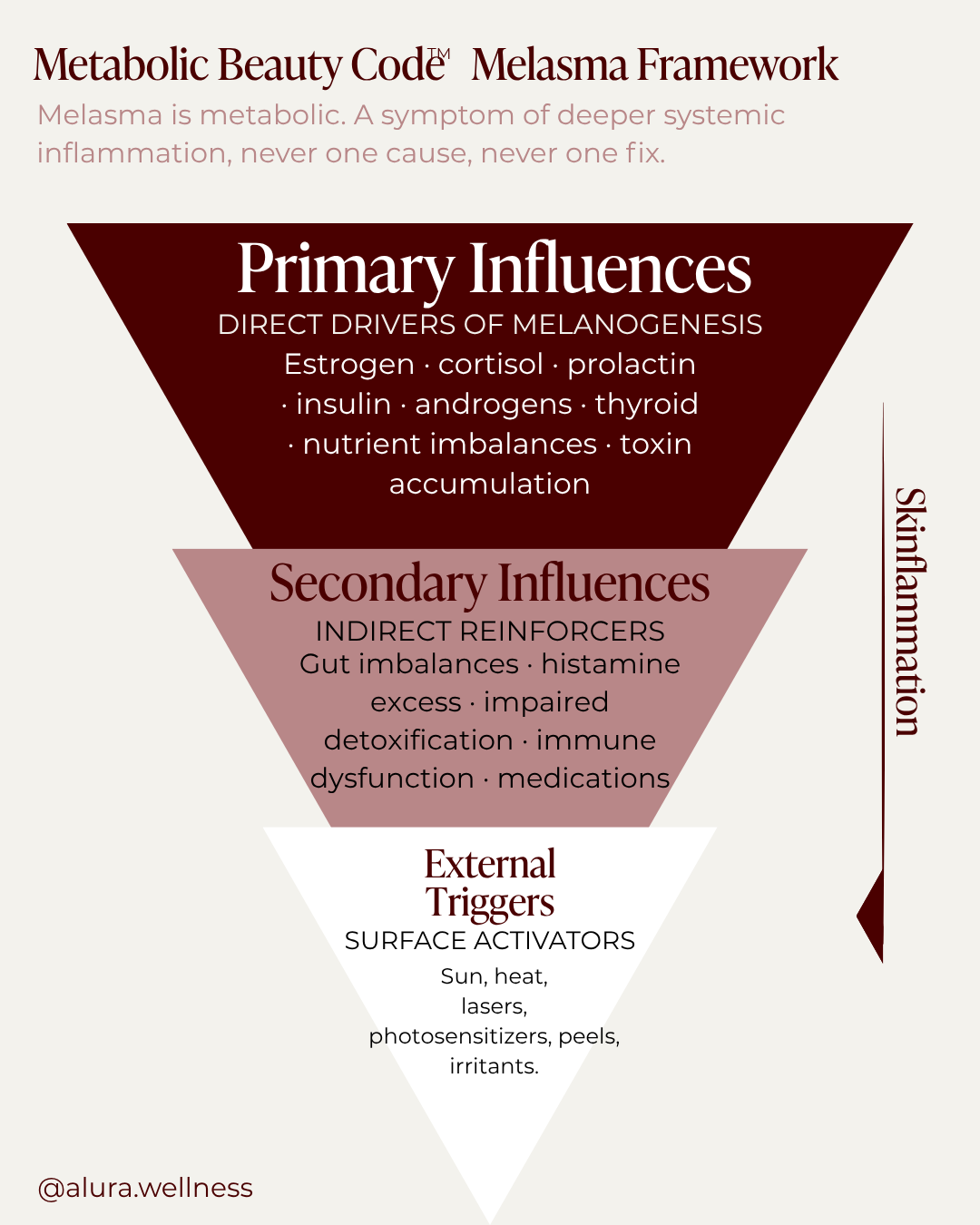
Melasma Is Metabolic™: The Complete Framework
The conventional approach to melasma treats pigmentation as a surface problem. The Metabolic Beauty Code™ treats it as a metabolic one, and the difference is everything. A complete framework for why melasma forms, why it returns, and what reversal actually requires.

Thyroid and Melasma: What the Research Now Shows
Thyroid dysfunction doesn’t cause melasma, but both arise from the same stressed terrain. Learn how inflammation, autoimmunity, gut permeability, estrogen dominance, and oxidative stress create the thyroid–melasma overlap.

Hormones and Melasma: How Hormone Imbalances Drive Pigmentation
Melasma is metabolic — and hormones are how that metabolism expresses on your skin. Estrogen, progesterone, thyroid, prolactin, cortisol & insulin explained.
Liver Detox and Melasma: Why Detox Can Make It Worse
Liver detoxification is essential for melasma—but only when your terrain is ready. This guide explains how Phase I, II, and III detoxification impact estrogen, histamine, bile flow, and oxidative stress, and how to detox safely without worsening pigmentation.

Can Environmental Toxins Cause Melasma? (Hormones, metals & mold)
Environmental toxins are one of the most common denominators in melasma, but rarely the only cause. This guide explains how heavy metals, mold, and xenoestrogens amplify estrogen, histamine, and oxidative stress—and how to address toxic load safely without worsening pigmentation.

Gut Health and Melasma: How the Gut Influences Pigmentation
Your gut controls the immune, hormonal, and inflammatory signals behind melasma. This guide explains how dysbiosis, histamine overload, mast cells, iron, and estrogen recycling activate pigment—and how to calm the gut–skin axis to heal melasma naturally.

Best Vitamins and Minerals for Melasma (What Actually Helps)
Micronutrients for Melasma: Vitamins & Minerals That Regulate Pigment, Hormones, and Skin Biochemistry

Melasma Diet: What to Eat to Reduce Pigmentation Naturally
Learn how diet affects melasma by regulating inflammation, estrogen metabolism, cortisol, gut integrity, histamine, liver detox, and melanocyte activity. This guide breaks down the foods that feed pigment vs. the foods that help fade it.
Featured on the Blog
Explore in-depth, transformative articles on skin health, hormones, longevity, and functional beauty, written to guide you, inspire you, and help you decode the root causes behind your most stubborn symptoms. This is your hub for real science, real strategy, and real results.

because your skin deserves more than spf and serums