Can Environmental Toxins Cause Melasma? (Hormones, metals & mold)
Metabolic Beauty Code™
Can Environmental Toxins Cause Melasma? (xenoestrogens, heavy metals & mold)
The Real Reason Melasma Won't Resolve
Most melasma treatment focuses on the skin. Topicals, lasers, SPF. But for a significant subset of women, melasma persists, or keeps returning, regardless of what is applied externally.
That is not a skincare failure. That is a metabolic signaling problem.
Melasma is metabolic, and environmental toxins are one of the most underrecognized drivers of the metabolic signaling that keeps it active. Synthetic chemicals, heavy metals, and mold do not cause melasma the way a trigger causes a reaction. They work by continuously amplifying the internal conditions that make melanocytes hyper-reactive, estrogen load, histamine accumulation, oxidative stress, mast cell activation, and impaired detoxification, simultaneously and in a self-reinforcing way.
This is why environmental toxic load so often explains the cases that don't respond. The hormonal work has been done. The gut has been addressed. Inflammation is lower. And melasma is still there. In most of those cases, environmental burden is the layer that hasn't been touched.
Different toxins, different entry points, same biochemical outcome: a more reactive metabolic environment and a more activated melanocyte. This is the Metabolic Beauty Code™ lens on environmental toxins, not what they are, but what they do to the internal signaling that drives pigment.
If melasma continues to persist despite treatment, this is often the missing layer → Why Your Melasma Won't Go Away
XENOESTROGENS — The Chemical Hormone Imposters
The term "xenoestrogen" is typically used to describe synthetic chemicals, plastics, pesticides, fragrances, that mimic estrogen at the receptor level. But the Metabolic Beauty Code™ framework takes a broader view, and the clinical evidence supports it: every major category of environmental toxin behaves like a xenoestrogen to some degree.
Heavy metals amplify estrogen signaling and sensitize estrogen receptors. Mycotoxins block the Phase II liver enzymes responsible for estrogen conjugation, allowing estrogen metabolites to reaccumulate. Synthetic chemicals bind estrogen receptors directly or suppress progesterone receptor activity, shifting the estrogen-progesterone ratio in the direction that most reliably activates melanocytes.
The mechanism differs by toxicant. The hormonal outcome is nearly identical across all of them: estrogen load rises, progesterone is suppressed, histamine accumulates, and the melanocyte receives a sustained activation signal. This convergence is why environmental toxin load is such a consistent finding across melasma cases, and why addressing only one category while leaving others in place produces incomplete results.
Synthetic chemical xenoestrogens are the most direct category, and the most pervasive:
They come from:
plastics (BPA, BPS)
receipts
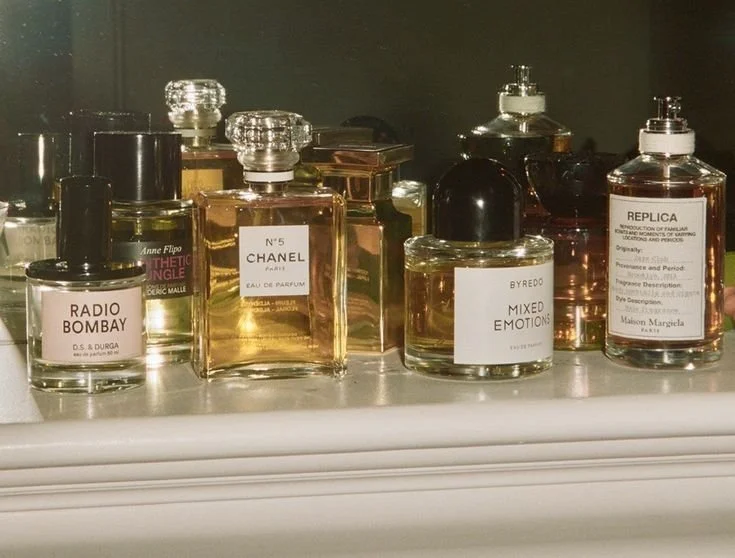
perfumes and fragrance
conventional skincare and makeup
detergents and cleaning products
pesticides and herbicides
nonstick cookware
tap water

1. Direct Estrogen Receptor Activation
Xenoestrogens bind ERα directly → melanocyte activation → melanin ↑.
No conversion required. No hormonal fluctuation needed. Just receptor binding, and the downstream cascade begins.
2. Progesterone Receptor Blockade
Chemical xenoestrogens compete for and block progesterone receptor sites.
This doesn't lower progesterone levels on labs. It renders progesterone functionally inactive, unable to perform its role as the brake on the histamine-estrogen loop.
3. Overloaded Liver Detox → Estrogen Reaccumulates
Xenoestrogens saturate Phase I liver detox pathways. When Phase I outruns Phase II, estrogen metabolites, including more reactive, proliferative forms, accumulate rather than clear.
4. β-Glucuronidase ↑ → Estrogen Recycling
Xenoestrogens promote gut dysbiosis → elevated β-glucuronidase → estrogen that should have been excreted gets deconjugated and reabsorbed.
More recycled estrogen → more loop activation.
5. Xenoestrogens ↑ Oxidative Stress
Xenoestrogens generate free radicals → melanocyte protection response → melanin ↑.
This operates as an independent pigmentation pathway alongside the hormonal mechanisms above.
Xenoestrogens may be a core driver if your melasma worsens with:
new skincare or makeup products
fragrance exposure
strong PMS symptoms
breast tenderness
hormonal weight gain
acne and melasma simultaneously
HEAVY METALS — The Melanin Amplifiers
(Lead · Mercury · Cadmium · Arsenic · Aluminum · Copper Imbalance)
Heavy metals are not processed and excreted like other toxins.
They accumulate in bone, fat, organs, and skin tissue, where they continuously drive hormonal disruption, oxidative damage, and melanocyte activation.
This is why metal toxicity doesn't resolve on its own. And why reducing ongoing exposure is always step one.
Metals drive melasma through nine major pathways:
1. Metals ↑ Oxidative Stress → Melanin ↑
Oxidative stress is one of the primary triggers for melanocyte activation (→ Oxidative Stress and Melasma)
Heavy metals trigger free radicals and hydroxyl radicals → direct melanocyte activation.
2. Metals ↑ Tyrosinase Activity
Tyrosinase is copper-dependent. Copper dysregulation → melanin spikes.
3. Metals Block Zinc
Zinc is the mineral that inhibits melanin production. Metals displace zinc → pigment deepens.
4. Metals ↑ Estrogen Retention
Cadmium, mercury, and arsenic impair estrogen detoxification. Aluminum increases estrogen receptor sensitivity. More estrogen → more melanin.
5. Metals Act as Metalloestrogens → Direct ER Activation
Certain heavy metals, cadmium, lead, mercury, arsenic, nickel, don't just amplify estrogen.
They are estrogen, functionally.
They bind directly to estrogen receptors (ERα) and activate them, without actual estrogen present.
This is called metalloestrogen activity.
Cadmium has been shown to promote cell proliferation by directly activating ERα. Lead does the same, binding ERα and triggering estrogen-like downstream effects.
For melasma, this means:
Metal burden = estrogen receptor load, independent of your hormonal status.
This is why melasma can persist or worsen even after hormonal interventions, in postmenopausal women, or when estrogen levels appear completely normal on labs.
6. The Copper–Estrogen Loop
Copper deserves its own pathway because it operates as a nested feedback loop inside the broader histamine-estrogen cycle.
Estrogen ↑ copper retention Estrogen promotes copper accumulation in tissue. The higher the estrogen load, the more copper accumulates.
Copper ↑ estrogen activity Excess copper amplifies estrogen signaling, accelerating the loop.
Copper dysregulation → zinc depletion → DAO suppression → histamine ↑
This is the critical link most clinicians miss.
Copper is required for DAO activity, but only when it is properly bound and utilized. In copper dysregulation, copper accumulates in an unbound, bio-unavailable form. This displaces zinc, which is essential for functional DAO activity.
Zinc depletion → DAO down → histamine can't clear → histamine feeds back into estrogen production → estrogen retains more copper → loop continues.
In melasma cases with impaired gut function, which is most persistent melasma cases DAO is already compromised. Copper dysregulation compounds this directly.
The copper-estrogen loop doesn't exist separately from the histamine-estrogen loop. It feeds into it, and amplifies it through the zinc-DAO axis.
7. Metals ↑ ACTH → α-MSH → Melanin
The HPA axis is a direct target of heavy metal toxicity.
Cadmium accumulates in the hypothalamus and pituitary gland, the upstream control centers of the stress hormone cascade, disrupting ACTH secretion and downstream signaling.
Mercury further compounds this by directly altering pituitary hormone output, including melanocyte-stimulating hormone (α-MSH). Dysregulated ACTH → ↑ α-MSH → direct melanocyte activation → melanin production.
This is an independent pigmentation pathway that operates entirely outside of UV exposure or topical triggers.
8. Metals ↑ Mast Cell Activation & Histamine
Mast cells interpret metals as danger signals. They release histamine → H2 receptors on melanocytes → pigment increases.
This feeds directly back into the histamine-estrogen loop above.
9. Metals Damage the Gut
Metals cause dysbiosis, intestinal permeability, and DAO suppression, compounding every pathway above and further locking in the histamine-estrogen loop.
Gut integrity is critical for regulating these cascades (→ Gut Health and Melasma)
Heavy metals don't just worsen melasma, they make ALL pigment pathways hyper-reactive.
MOLD — The Invisible Histamine Trap
(Mycotoxins · Water-Damaged Buildings · Humidity Exposure)
Mold is one of the most underidentified drivers of persistent melasma.
It operates primarily by dismantling the very mechanisms that keep the histamine-estrogen loop in check, DAO activity, progesterone production, and estrogen detoxification.
When mold is present, the brake is gone.
1. Mold Suppresses DAO → Histamine Accumulates
DAO is the primary exit route for histamine. Mycotoxins directly suppress DAO activity, meaning histamine produced from any source cannot clear efficiently. In a gut that is already compromised, DAO is already low. Mold makes this significantly worse.
2. Mold Blocks Estrogen Detox → Estrogen ↑
Mycotoxins inhibit Phase II liver detoxification enzymes, the pathway responsible for conjugating and clearing estrogen. When Phase II is impaired, estrogen metabolites reaccumulate in circulation. More estrogen → more mast cell activation → more histamine → the loop accelerates.
3. Mold Suppresses Progesterone
Mycotoxins directly suppress progesterone production. Progesterone is the brake on the histamine-estrogen loop, stabilizing mast cells, supporting DAO, and opposing estrogen at the receptor level.
When mold removes progesterone from the equation, the loop runs completely unopposed.
4. Mold Activates Mast Cells
Independent of histamine accumulation, mold directly activates mast cells, triggering degranulation, inflammatory mediator release, and melanocyte stimulation.
This immune-driven pathway is a major contributor to pigment formation (→ Inflammation and Melasma)
5. Mold ↑ ACTH → α-MSH → Melanin
Chronic mold exposure activates the stress response. More ACTH → more α-MSH → more melanin.
This pathway runs parallel to and compounds the histamine-estrogen loop.
6. Mold Damages the Gut
Leading to increased intestinal permeability, LPS translocation, systemic inflammation, and further DAO suppression, feeding back into every pathway above. (→ Gut Health and Melasma)
Mold may be a core driver if your melasma worsens with:
humidity or heat
old or water-damaged buildings
wine, cheese, or fermented foods
sinus congestion or chronic sinus issues
headaches
chemical sensitivities
night sweats
itchy skin
THE SHARED OUTCOME
Different toxins. Different entry points. Same loop.
All three categories:
elevate estrogen receptor load
suppress progesterone
impair DAO
activate mast cells
drive histamine accumulation
feed the histamine-estrogen feedback cycle
And because both estrogen and histamine independently activate melanocytes, through separate receptor pathways, the result is melanocyte hyper-reactivity that no topical can fully address.
This is the metabolic signaling behind persistent melasma.
How to Address Toxins Safely — A Melasma-Appropriate Approach
This is stabilization, not detox. The goal at this stage is reducing incoming toxic load and creating the conditions for safe clearance, not mobilizing stored toxins before the exit routes are ready.
1. Reduce Exposure First
The highest-leverage intervention is reducing the inputs that are continuously adding to the toxic burden. Low-toxin skincare and fragrance-free personal care products remove a daily xenoestrogen exposure that most people never account for. Glass and stainless steel food storage eliminates ongoing BPA and BPS leaching. Filtered water reduces chlorine, fluoride, and heavy metal exposure. Mold-free environments are non-negotiable for anyone whose melasma pattern tracks with humidity, fermented foods, or buildings with water damage history. Toxin-free cleaning products complete the household audit.
Reduction comes before clearance. The body cannot effectively eliminate what is still arriving continuously.
2. Stabilize Before Mobilizing
Toxin mobilization, any intervention that moves stored metals, mold metabolites, or chemical residues from tissue into circulation, should not begin until drainage is open, the gut lining is stable, bile is flowing, histamine load is controlled, and inflammation is lower. Mobilizing toxins before these systems are functional means the compounds have no clear exit route and will recirculate, driving exactly the kind of oxidative and inflammatory flare that darkens melasma.
This is the biochemical explanation for why so many detox protocols worsen pigment. It was not the intention that was wrong. It was the sequence.
3. Support Binding Through Food and Diet
The gut is the primary exit route for mobilized toxins. Adequate fiber from whole foods provides the binding capacity to carry toxins out through the stool before reabsorption occurs. Pectin-rich foods, cruciferous vegetables, and chlorophyll-containing greens support this process through their natural binding and elimination properties. The dietary approach to binding is slower than supplemental binders but does not carry the risks of aggressive mobilization.
4. Mineral Balance
Zinc, selenium, and magnesium are the mineral foundation for toxin clearance. Zinc activates metallothionein, the body's primary intracellular metal-binding protein, which sequesters and facilitates metal elimination. Selenium supports mercury-specific detoxification pathways. Magnesium is required for liver stability and hundreds of enzymatic detox reactions. Food-based mineral repletion, oysters for zinc and selenium, magnesium-rich whole foods, addresses these needs without the recirculation risk of aggressive supplemental protocols.
5. Support Bile Flow
Bile is the primary exit route for metals, mold metabolites, and estrogen conjugates. When bile is sluggish, these compounds are reabsorbed in the small intestine rather than excreted. Bitter foods before meals, adequate fat intake to stimulate gallbladder contraction, and taurine-rich foods support bile flow as part of the dietary foundation. This is not a separate supplement intervention, it is part of the food-first approach to keeping the exit routes open.
6. Avoid Aggressive Mobilization Strategies
High-dose glutathione, DMSA/DMPS chelation, aggressive sauna protocols, and high-dose NAC all mobilize stored toxins rapidly. In the absence of fully open drainage, stable gut function, and controlled histamine, this mobilization drives recirculation. The melasma response is predictable: oxidative stress spikes, histamine releases, melanocytes activate, and pigment darkens. These interventions have a place in toxin clearance, but that place is later in the sequence, not at the beginning.
7. Nervous System Regulation
Environmental toxins and chronic stress potentiate each other through the ACTH–α-MSH axis. Toxin-driven inflammation elevates cortisol. Cortisol elevates ACTH. ACTH elevates α-MSH. α-MSH directly stimulates melanin production. Daily nervous system regulation, through whatever practices create genuine parasympathetic activation, is not adjunctive to toxin clearance. It is part of the same metabolic loop.
Conclusion
Environmental toxins are the most consistent cross-case pattern in melasma. They appear in almost every presentation, in different combinations and at different intensities, but the biochemical outcome is nearly identical across all of them. They amplify estrogen dominance, increase histamine load, drive oxidative stress, activate mast cells, stagnate bile, and inflame the gut simultaneously. Different mechanisms. The same metabolic signaling outcome.
Toxins are rarely the single cause of melasma. They are the load that tips an already burdened metabolic environment into persistent, treatment-resistant pigment. Addressing them is not optional, but the sequence matters as much as the intention. Drainage open, gut stable, mineral balance restored, then the toxic burden can be reduced safely, and the liver can finally do its work.
When the toxic load decreases, the metabolic environment shifts. When the metabolic environment shifts, Metabolic Glow becomes possible.
Continued Reading…
Trending Topics